Teacher Resources
TEACHER RESOURCES:
As you prepare your group for a visit to the Littleton Museum and living history farms, you may want to find ways to prepare your students for the time periods they will be exploring and what life was like in the 1860s and 1890s. You will find that Front Range communities like Littleton were deeply connected to Colorado history, whether as a pathway for wildlife, Native people, explorers & trappers, railroads, and later highways, or as an agricultural community that provisioned Denver and other large cities throughout the country, or as a space embroiled in conflict between immigrant pioneers and Native tribal nations, Littleton and the Front Range has helped to shape our national character and identity.
Below you will find information that will support your visit.
Some of the materials are specific to the Littleton Museum living history farms and relate to our historic buildings. Other resources will help expand your understanding of history through first-hand accounts, written by people who explored Littleton and the surrounding region in the 19th century and by people whose ancestors had lived in this area. You will also find a list of rules and tips to keep your students safe and what to be aware of prior to a visit to the Littleton Museum.
If you have specialized questions beyond what our resources here offer, you may reach out to the museum directly. Contact Ryan Badger (rbadger@littletonco.gov) and we will address your questions as quickly as we can.
Resources:
From the Museum:
Homestead Form:
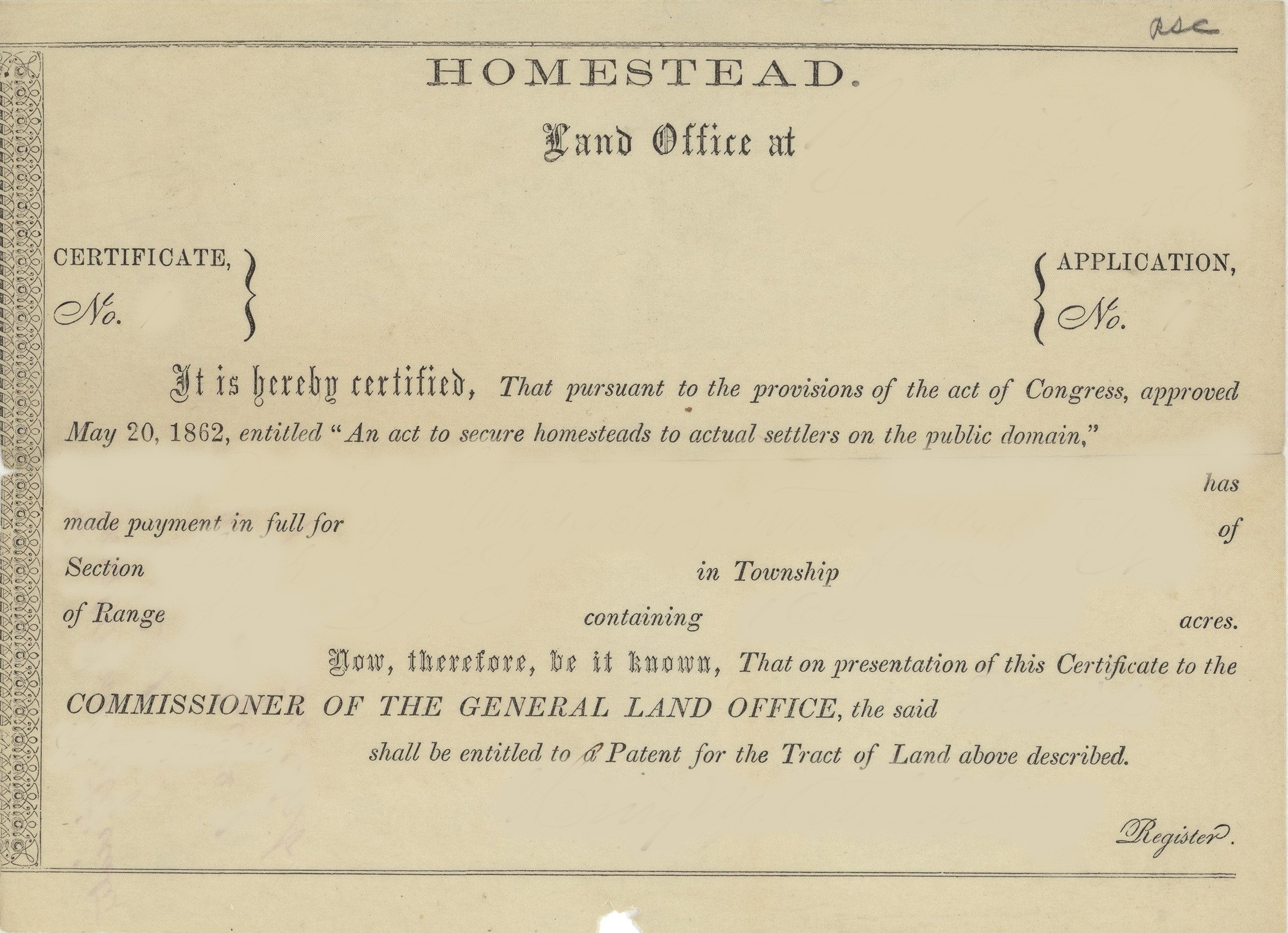
The Homestead Act, ratified by President Abraham Lincoln in 1862 opened western lands to purchase for raising crops, timber or livestock. Land was available in 160-acre parcels, per individual filing. A deed to the land transferred from the US government to the homesteader after 5 years of occupation and constructed "improvement" on the homestead. This is a scan of an actual homestead claim from the 1860s. It comes from the Library of Congress Archives and is available to use for lessons or educational activities, such as the Farming Activity included above.
Books to Read:
From authors based in Littleton:
The "Little Britches" series, by Ralph Moody:
- Man of the Family
- The Home Ranch
- Mary Emma & Company
- The Fields of Home
- Shaking the Nickle Bush
- The Dry Divide
- A Horse of a Different Color: Reminiscences of a Kansas Drover
Other books on Colorado:
- Kit Carson, Milo M. Quaife, Kit Carson's Autobiography
- Althea Bass, The Arapaho Way: A Memoir of an Indian Boyhood
- Isabella L. Bird, A Lady's Life in the Rocky Mountains
- Hal Borland, High, Wide, and Lonesome: Growing Up on the Colorado Frontier
- Andrew Gulliford, The Wooly West: Colorado's Hidden History of Sheepscapes
- Upton Sinclair, King Coal
- Thomas G. Andrews, Killing for Coal: America's Deadliest Labor War
Farm Rules:
- No Food or Beverages: Remember snacks and picnics must be enjoyed on the museum’s front lawn or at one of the nearby parks. No food or beverages are allowed in the museum or out on the farm sites.
- Clothing: Please remember that clothing and shoes help to protect us from the environment around us. While visiting the museum you must always be fully clothed and wearing shoes.
- Photography: Amateur photography is allowed in the museum, but please remember to turn off the flash, which can damage sensitive artifacts. Please refer to the museum’s photography policy (available at the front desk) regarding portraits, professional photography, and commercial videography.
- Livestock: When looking at the livestock, please remember that all our animals can bite, peck, or scratch you, possibly causing injury. Our livestock are fed a balanced diet and feeding them something you found on the ground (yes, even a handful of grass), can make them sick. Please do not feed the livestock.
- Wild Animals: Canada geese make the museum their home year around. On a very rare occasion you might see a fox or coyote. Please remember approaching any wild animal, especially if they appear sick, can cause you injury. If you see an animal in distress, please alert a member of the museum staff or call the museum front desk at 303-795-3950.
- Please do not touch art or artifacts. The oils and dirt from your hands can damage sensitive artifacts and artwork. Please help us preserve our artifacts and artwork for future generations and touch items only when invited to by museum staff or signage.
- Museum Gardens: Did you know that we use the produce we harvest from our gardens and orchards in our foodways programs? We do! Every year our historic site interpreters demonstrate how food was preserved and used in the past. So, please don’t pick the fruits and vegetable you see growing at the museum.